Wednesday, May 16, 2012

If Entertainment Tonight, Discovery Channel and TEDx had a baby*...

... it would have to be this youtube channel to which you can subscribe; Big Think.

By far, this has to be the single most fascinating thing on the web; a self-described "knowledge forum featuring the ideas, lessons, stories and advice of leading experts from around the world".

It's choc full of big thinkers and their awfully big thoughts. Those interviewed (on a frequent and recurring basis) are cream-of-the-crop intellectuals including the likes of Michio Kaku, Prof. Cornell West, Neil deGrasse Tyson, James Randi, Bruce Bueno de Mesquita (featured below, espousing the pros/cons of dictatorships and democracies incl. a pointed reference to Lee Kuan Yew of Singapore) among many others. Few topics are left untouched - astrophysics, development economics, politics, art, philosophy and the most pressing social issues of today. Bloody marvelous!


It's updated almost daily, with videos usually lasting less than 5 minutes; however, I'm often left pondering for many hours afterwards about their revelations. Perhaps best of all, most of the discussion is presented in layman's terms, allowing slightly thicker heads (especially my own) to not just understand but savour and enjoy the lesson. 

Without fail, it also makes procrastination productive - you're entertained, you learn something, and are now well-positioned to pretend you're somewhat intelligent and informed in front of your friends. 


* Note: In hindsight, I could have used a less colorful title but I'm hopeful this at least grabbed your attention.

Friday, May 11, 2012

"What is 'Leadership' and what does it mean to you?", asked the Professor.

Ugh. I both love and hate questions like this. I could go on for hours about it, but surely there's no final all-encompassing truth to this? Just when you think you have a hold on some kind of shadow of an answer, someone comes along and says something that makes you shift your stance a little more and more and more until you're either confused or just don't care anymore. Then again, I suppose any aspiring 'leader' should know something about 'leading'.

Wikipedia says (via Chemers, 1997) that leadership is “a process of social influence in which one person can enlist the aid and support of others in the accomplishment of a common task." Right. Let's go home.

However, one factor about leadership that always creeps into my mind when this sort of discussion arises is the differentiation between it and management. People cross their wires on this all the time, perhaps understandably. "Management is doing things right; leadership is doing the right things" (a classic Peter Drucker line, there). Where management is about breaking down an idea or problem into logical or 'manageable' components, leadership goes the opposite way; to bring these different components together towards a common task or... wait for it... Vision.

I've always liked that word, even more so now after recently completing Tom Rath's StrengthsFinder 2.0, an online tool which allows you to identify your natural strengths, find ways to refine them further and incorporate them into what you do everyday. A load of pretentious tripe, most likely.

Of course, I've lapped up everything it's told me. It seems my single greatest strength is being Futuristic - "... inspired by the future and what could be. They inspire others with their visions of the future". I would agree with this assessment, too. While this revelation certainly strokes my ego there's no doubt that, first and foremost, a leader in any capacity has to know why they want to go somewhere (not just how) and be able to articulate it. That is what gives purpose to people - managers, employees, subordinates, citizens, whoever.

Martin Luther King's "I have a dream" speech delivered to a massive audience on the steps of Washington in 1963 would certainly be a contender for visionary moment of the 20th century. In it, he captures precisely what the civil rights movement in America was all about at this time. It certainly inspires, even across time and generations. But it's more than a speech that makes leadership - it's the encapsulation of an idea (and the ability to articulate it and mobilize resources around it) that made MLK a worthy and effective leader of the civil rights movement.


The March for Jobs and Freedom on Washington during that time, and especially King's speech, helped put civil rights at the very top of the liberal political agenda in the United States and facilitated passage of the Civil Rights Act of 1964. It was a circuit breaker. It summed up all the ills, the hates, the wrongs of racial segregation in America but went further than that - it gave people a clear sense of what could and should be. Policy makers and citizens alike could visualize what the fight for racial equality was for, what all the pain and effort was for. It allowed them to all move in the right direction, together.

Before anything else happens, leadership (whether performed individually or through consensus) must establish and articulate a vision/mission/goal for others to pursue. Management, strategy, execution - these things can only proceed, not precede

Thursday, May 10, 2012

G'day and Welcome

This blog has actually been revived after 2 years in stasis.

I began it when living and working in Ulaanbaatar (Mongolia) during 2010. At that time, I was making a host of new friends from across the world who all seemed to have their own blogs - travel stories, photography, political discussion, humor, cooking, women's rights, beer sampling... I was struck by the creativity that these new friends of mine had in composing their thoughts, their word-smithing, making something compelling. They all seemed to have their own 'niche' which they pursued. It was somewhat inspiring. A vague urge to do something like that arose in me.

So I attempted a blog titled 'DIY World Domination'; Do-It-Yourself, for those who despise abbreviations. It came out of my interest in how certain individuals manage to find their way into positions of considerable power; not so much a historical sweep of the steps they took, but rather an attempt to discern the circumstances that permitted them to become whoever they are today. What's their personality type? Humble background or elitist-origins? Did they get there through chance or their own design? Is it better to be loved or respected? Were they born for it, or did they beat the odds? Etc etc...

Self-motivation propelled this subject choice, as I aspire to be a public leader one day. "How can I be more like that guy?" and "what's that guy got that I don't?" frequently enters my head when I read or listen to compelling leaders of today. So really, it was a futile exercise in fueling my own ego and plotting a way to 'the top'. Whatever that means.

Alas, despite all my intentions, I got as far as deciding on a colour scheme and designing a nifty-looking header. Then I met a girl, summer arrived and all interest quickly dissipated...

Jump forward 2 years; I'm currently living in Singapore and undertaking a Master of Public Administration degree at the Lee Kuan Yew School of Public Policy (within the National University of Singapore). We're nearing the end of our studies, and have just started a short course titled 'The Art of Leadership' - or AOL. It's an interesting (and I expect, useful) exercise in analyzing one's strengths, capacity for working in team environments and inherent weaknesses that might be mended. Part of our course requirements requires us to put together a blog as, apparently, "creating an online presence is increasingly important for leaders". Blind Freddy could tell you that. But, while I don't believe in fate, it was certainly a good excuse to bring this blog back to life and have another shot at world domination.

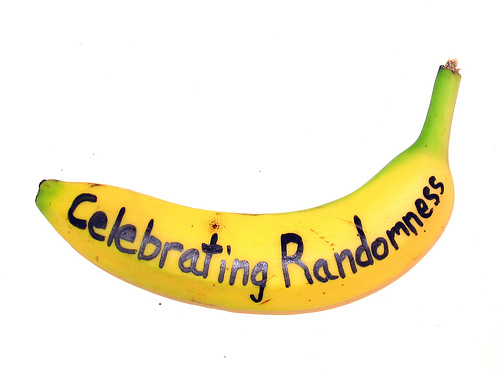
I'm aiming to really take a shoot-the-breeze approach to this (the blog, that is, not world domination). I'll write when I feel like it, which may not be all that often. Probably when a topic jumps jumps out at me, I suppose. I'll jump between geopolitical gossip, politics here and there, history and maybe insights from my own life too (there goes that ego again). I'll always try to make it meaningful, and perhaps share a revelation about something now and again. It'll be random and sometimes rambling, often broad. If that doesn't appeal, maybe I'll change tact down the track.
Just to kick things off...

Comments, feedback and new ideas are all welcome in the meantime.

Carl